When shopping for a handmade cutting board, you’ll often see the terms face grain, edge grain, and end grain. Each describes how the wood is oriented in the finished board, and each has a different balance of looks, durability, maintenance, and cost.
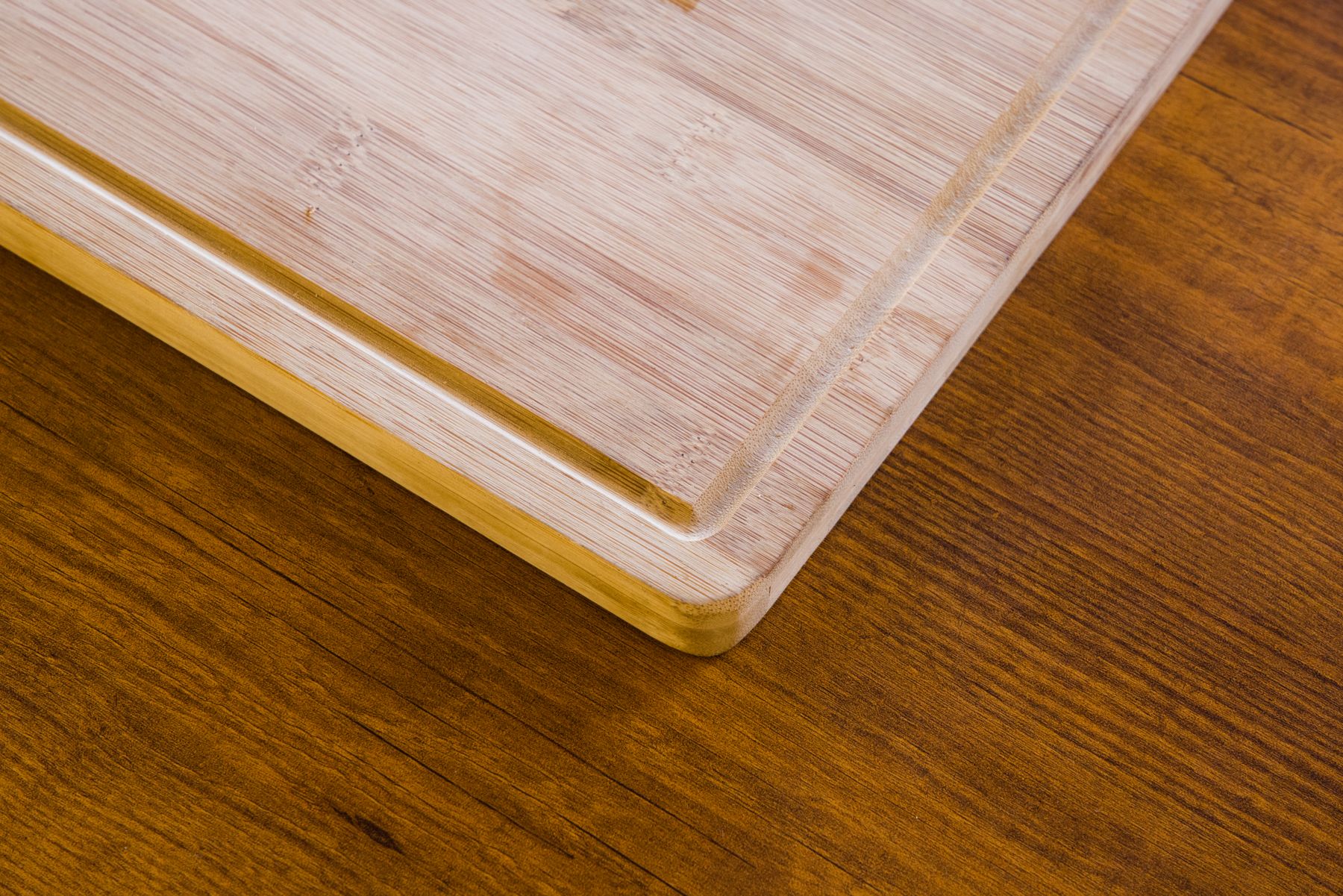
Face grain cutting boards
A face grain board displays the broad surface of the lumber—the same surface most people picture when looking at a wooden plank. This orientation often shows wood at its most visually dramatic. Walnut can display sweeping dark grain, cherry develops warm reddish tones, and figured maple can become the focal point of the entire piece.
Face grain construction works especially well for serving boards, charcuterie boards, cheese boards, decorative kitchen pieces, personalized gifts, and light-duty cutting boards. Because it is generally simpler to build than edge grain or end grain construction, it can also be a more economical option.
The tradeoff is that repeated knife use cuts directly across the exposed fibers, so knife marks can become more visible over time than they would on a properly built end grain board.
Edge grain cutting boards
Edge grain boards rotate strips of lumber so the narrower edge of each strip becomes the cutting surface. Those strips are laminated together, creating the familiar striped appearance seen on many butcher-block-style boards.
Edge grain offers an excellent balance of durability, appearance, and price. It generally handles repeated knife use better than face grain while requiring less labor and material preparation than most end grain boards.
End grain cutting boards
End grain construction turns pieces of wood so the ends of the fibers form the cutting surface. Imagine looking at the end of a bundle of drinking straws instead of along their sides. That is a simplified picture of the fiber orientation.
When a knife contacts an end grain surface, the blade can move between exposed fibers rather than repeatedly cutting across their length. Knife marks may therefore be less noticeable, and end grain is often favored for frequent chopping and serious food preparation.
End grain boards also allow striking checkerboard, brick, and geometric patterns—but they require considerably more cutting, milling, glue-up work, flattening, sanding, material, and production time.
Which type is best?
There is no single answer for every customer. If appearance and serving are the priority, face grain may be the best value. If you want a durable everyday cutting board at a practical price, edge grain is often an excellent choice. If the board will see frequent knife work and you want a premium construction method, end grain may justify the additional cost.
The intended use should drive the construction—not whichever woodworking term happens to sound the most premium.
Wood species matter too
Grain orientation is only part of the equation. Hard maple and walnut are popular choices because they combine attractive appearance with characteristics well suited to kitchen use. Cherry is another beautiful option and develops a richer color as it ages.
Woodworkers also have to consider how species behave next to one another. Fine dust from darker woods can migrate into the pores of lighter woods during sanding, sometimes creating unwanted discoloration or “color bleed.” Careful sanding, dust removal, sequencing, material selection, and finishing help reduce that risk.
Construction is only half the story
Even a well-built cutting board requires proper care. Wood reacts to moisture and changes in its environment, so cutting boards should not be soaked or placed in a dishwasher. Wash by hand, dry promptly, allow air to reach both sides, and periodically condition food-contact boards with an appropriate cutting-board oil or board-care product.
Choose a board around how you actually cook
A beautiful cutting board should be more than kitchen decoration. Before building a custom board, we consider intended use, dimensions, wood species, appearance, personalization, and how the customer expects the piece to be maintained.
At Legacy Woodworking, the goal is not simply to make something that photographs well. It is to build the right piece for how it will actually be used.
Planning a custom cutting board, charcuterie board, or cheese board?
Tell us what you have in mind