Modern woodworking does not have to mean choosing between traditional craftsmanship and modern technology. CNC routers and laser engravers expand what can be created—but neither replaces an understanding of wood, grain, joinery, finishing, or design.
What is CNC carving?
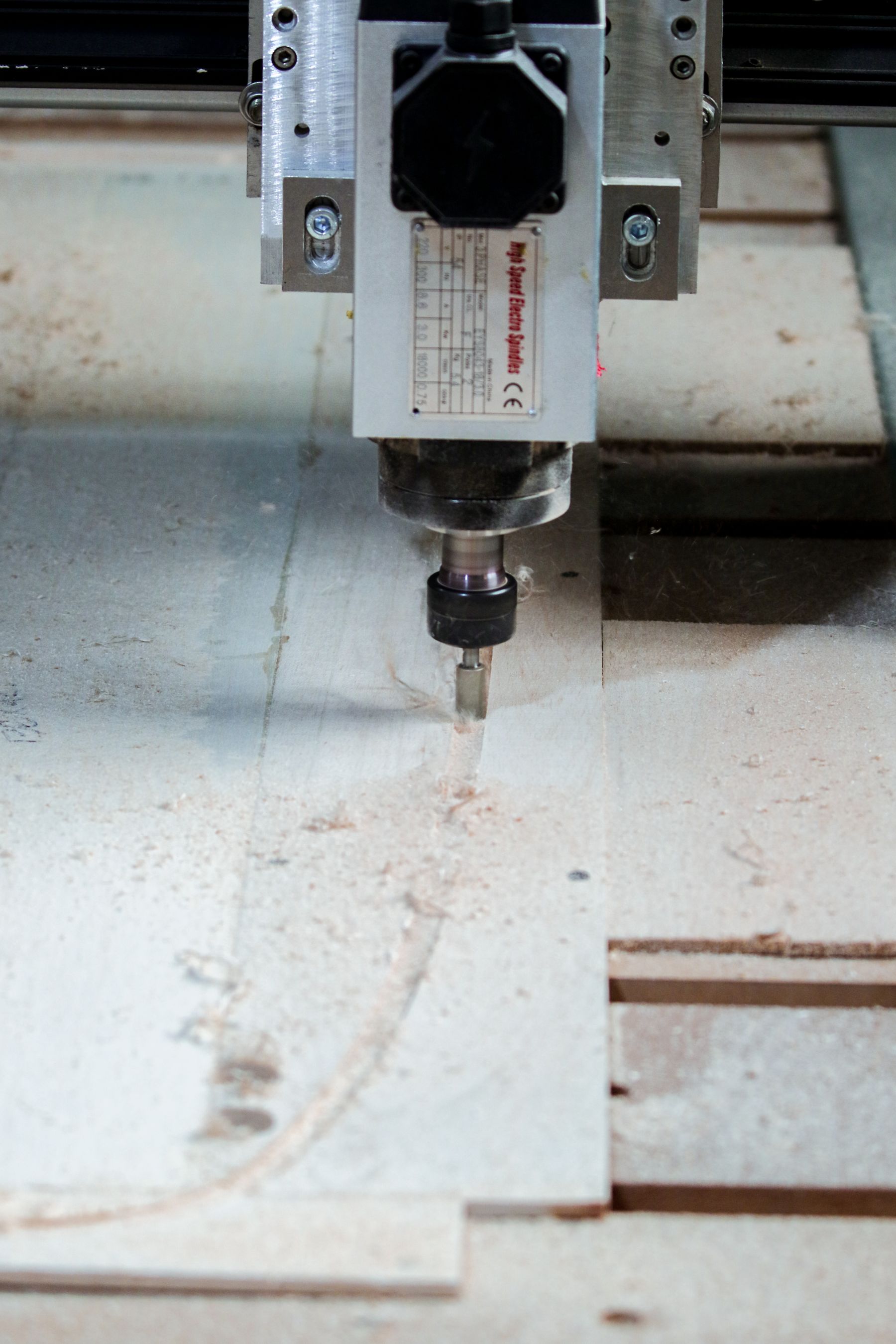
A CNC router is a computer-controlled cutting machine. Instead of moving a router by hand, software directs a rotating cutting tool along precise paths across the material. The bit physically removes wood, which means CNC machining is not limited to marking the surface.
Depending on the project, a CNC can cut completely through material, create pockets and recesses, produce lettering, machine joinery, cut furniture components, create inlays, shape contours, and produce three-dimensional relief carvings.
What makes a CNC relief different?
Relief carving uses varying physical depths to create a three-dimensional image. A detailed relief can contain foreground, middle ground, background, facial features, clothing, architecture, animals, or decorative elements that sit at deliberately different heights.
Most detailed relief work uses at least two machining stages. Roughing removes most of the excess material efficiently. Finishing uses a much smaller cutter and closely spaced toolpaths to reveal fine surface detail.
Good CNC artwork needs real depth
A photograph can contain enormous visual detail while still being poor source material for a relief. A strong CNC model needs clear silhouettes, deliberate foreground and background separation, controlled overlaps, and enough depth between important features for the cutter to physically reproduce them.
If every feature occupies nearly the same depth, the carving can look flat. If depth is exaggerated too far, faces and objects can become distorted or fragile. The digital design has to be created with the machining process in mind.
What is laser engraving?
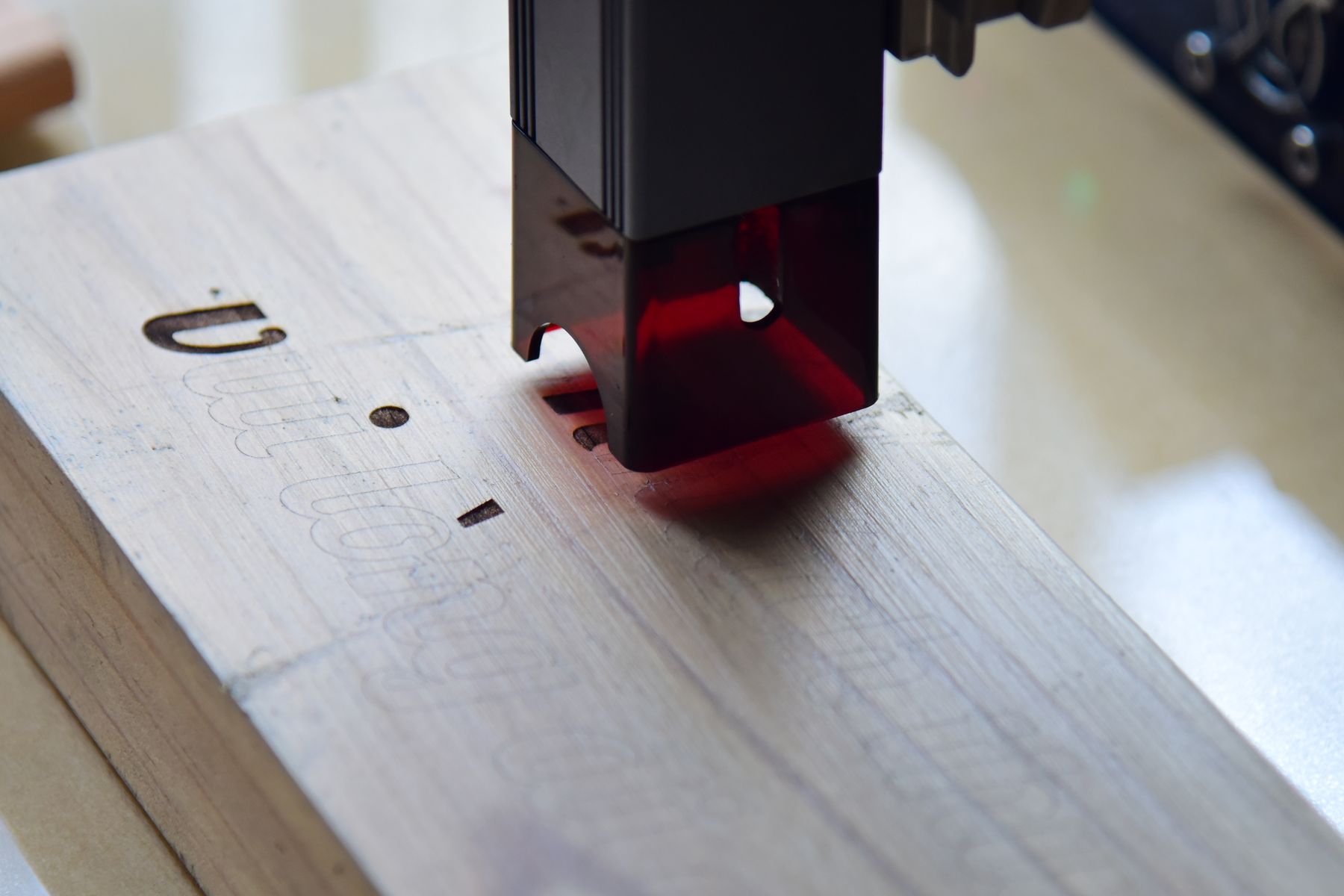
Laser engraving uses focused light rather than a rotating cutter. On wood, the beam heats and removes or darkens material in a controlled pattern. The result is typically much shallower than CNC carving, but a laser can create very fine surface detail without needing a physical router bit to fit between features.
That makes laser engraving especially useful for logos, names, dates, fine lettering, line artwork, photographs, QR codes, product branding, and small personalized details.
Laser engraving excels at personalization
Consider a hardwood whiskey smoker with a family name or initials engraved into the lid. The woodworking and shaping can be handled with traditional tools or CNC machining while the laser adds crisp personalization afterward.
The same approach works for cutting boards, coasters, signs, memorial pieces, and gifts. CNC and laser processes do not have to compete. They often work best together.
Can a laser create depth?
Yes, to a degree. Repeated laser passes can remove additional material and create shallow dimensional effects. But repeated passes also introduce more heat, and deeper removal can increase scorching, char, and cleanup depending on the material and settings.
For deep three-dimensional woodworking, CNC routing is generally the more appropriate process. For precise surface engraving and very fine personalization, the laser often has the advantage.
Which gives more detail?
That depends on what kind of detail the project needs. A laser can create exceptionally fine surface detail, including small text and narrow line work. A CNC can create true three-dimensional detail by physically shaping contours at different depths.
For a fine logo on a coaster, laser engraving may be the better tool. For a sculpted shield, memorial scene, wildlife carving, military tribute, or dimensional religious artwork, CNC relief carving offers possibilities that ordinary surface engraving cannot reproduce.
Neither tool replaces woodworking knowledge
A CNC can cut a component accurately, but someone still needs to understand grain direction, wood movement, workholding, joinery, sanding, and finishing. A laser can engrave a perfect logo, but it cannot determine whether the board underneath it was constructed correctly.
Technology expands what a woodworker can make. It does not remove the need to understand the material.
We use the tool that fits the piece
Some Legacy projects are primarily traditional woodworking. Others benefit from CNC machining. Some need laser personalization, and some combine all three. The customer should not have to choose a machine—the process should be selected around the desired result.
At Legacy Woodworking, the goal is simple: use the right combination of traditional methods and modern tools to make a piece that is precise, meaningful, and built to last.
Have an idea for a carved, engraved, or personalized piece?
Start a custom project